

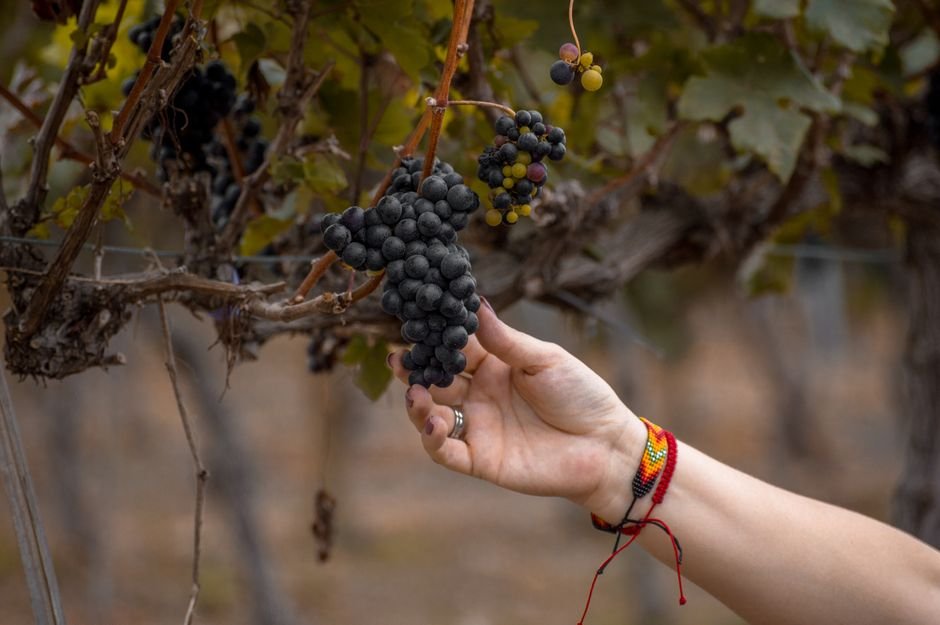
Headlines about a grape shortage might make you picture empty produce aisles. But the real story is more specific — and far more relevant to the wine industry than to anyone pushing a cart through a grocery store.
This article breaks down what kind of shortage is being projected, why it is happening after a period of oversupply, what the data shows about California’s 2025 crop, and how wine grapes and table grapes differ in this context.
California Wine Grapes Are at the Center of the Shortage Story
Before anything else, it helps to get the scope right. This is not a shortage of all grapes in every market. The shortage being discussed is specific to California wine grapes, and that distinction matters.
Industry analyst Jon Moramarco of bw166 has projected California’s 2025 wine-grape crush at approximately 2.25 million tons. If confirmed by an official crush report, that would be the smallest crop in 46 years. It is worth noting that as of now, this figure remains a projection, not a final confirmed number.
To put it in perspective: that estimate sits roughly 24% below the 2024 crop and represents less than half of what California produced in 2018. The decline is steep by any measure.
Sources including Vinovista, Wine-Searcher, and The Drinks Business all cite the 2.25 million-ton projection and describe it using the same “46-year low” framing. The consistency across outlets suggests the estimate is being taken seriously within the industry, even before official confirmation.
How a Glut Became a Potential Shortage
Here is where the story gets counterintuitive. California was not dealing with a scarcity problem just a year or two ago. It was dealing with the opposite — too many grapes and not enough buyers willing to pay for them.
Wine demand had been soft, prices were low, and growers were sitting on fruit they could not sell at a profit. According to The Drinks Business and Vinovista, reports indicate that nearly half of intended wine grapes went unharvested in a prior vintage. Some growers simply chose not to pick.
That decision makes sense in the short term. If the price you will receive does not cover your cost to harvest, you walk away. But it has consequences down the line. When fruit goes unpicked and growers reduce vineyard care or let blocks go, the pipeline for future seasons tightens. Supply does not bounce back overnight.
Think of it like a pendulum. One year, grapes sit on the vine because prices are too low to justify harvesting. The next year, wineries start looking for fruit — and there is not enough to go around. That swing from surplus to scarcity is exactly what analysts are describing for 2026.
Structural Changes Behind the Supply Decline
The single-season explanation only tells part of the story. Underneath the harvest decisions and market swings, there are longer-term structural shifts at work.
California has experienced a net loss of wine grape acreage. That means the physical capacity to grow grapes has shrunk — not just the willingness to harvest them. Fewer vines in the ground means fewer tons available regardless of what prices do.
Growers and wineries have been working to reduce excess inventory and find a more sustainable market equilibrium. But that process rarely produces a smooth landing. The adjustment tends to overshoot in one direction or the other.
According to analysis supported by UC ANR research and Terrain Ag, a meaningful supply recovery is more likely in 2027 or 2028 than in the near term. That is not a pessimistic reading — it is simply how long it takes for vineyard decisions to translate into measurable crop changes.
It is also important to note that this situation is not primarily a weather story. Market imbalance, grower decisions, and acreage reduction are the dominant factors. Framing the shortage as a result of drought or unusual weather would miss the bigger picture.
When Wineries Will Feel the Shortage Most
The timing of this shortage is not what most people would expect. Jon Moramarco has specifically warned that wineries could begin searching for grapes and find limited availability as early as June or July — months before the fall harvest even begins.
That is a significant operational concern for producers who rely on spot-market purchasing. In a tight market, buyers who wait until they need fruit may find that available supply has already been spoken for.
Wineries that previously sourced grapes opportunistically may need to contract earlier, accept varieties outside their usual preference, or pay higher prices to secure what they need. A tighter market does not always mean a gradual, predictable price increase — it can mean rapid shifts as buyers compete for limited supply.
The restaurant analogy is useful here. If a kitchen over-orders supplies one month and then cuts back sharply the next, it can suddenly find itself short of key ingredients mid-service. The wine industry is navigating a similar pattern — years of over-ordering followed by sharp pullback, now creating gaps in the supply chain at unexpected moments.
Table Grapes and Grocery Stores Are a Separate Market
If you have seen headlines about a grape shortage and wondered why your grocery store still has plenty of grapes in the produce section, there is a straightforward explanation: wine grapes and table grapes are different markets with different supply chains, growing regions, and demand cycles.
Table grapes are grown for fresh consumption. They are sourced from a variety of regions, both domestic and international, and their availability follows its own seasonal pattern. Current produce market reports from sources like Seashore Fruit and Produce show good or promotable supplies in some fresh-market channels — a picture that looks nothing like the wine-grape situation.
FreshPlaza has noted that the U.S. fresh market can see its own seasonal gaps in grape supply at certain points in the year, typically before domestic harvests come in. But that is a different and separate issue from what is happening in California’s wine-grape sector.
The key takeaway: a headline that says “grape shortage” without specifying which type of grape and which market is almost certainly incomplete. The shortage being projected for 2026 is concentrated in California wine grapes. It does not automatically mean that consumers will find fewer grapes at the supermarket.
Will Wine Prices Go Up?
This is a reasonable question, and the honest answer is: possibly, but not immediately, and not uniformly.
Wine prices are influenced by many factors beyond grape supply — production costs, import competition, retailer pricing strategies, and overall consumer demand. Terrain Ag’s analysis notes that demand for wine remains relatively weak even as supply tightens. That combination could limit how much producers can raise prices before losing buyers.
What is more likely in the short term is that growers gain more pricing power, particularly for in-demand varieties or well-located vineyards. Wineries that need to secure fruit will have less leverage than they did during the oversupply years.
For consumers, the most visible effect may show up gradually — through modestly higher prices at the shelf or reduced availability of certain regional California wines — rather than as a sudden, dramatic change.
For anyone tracking developments in the food, agriculture, and beverage sectors, TheBizOutline covers business news across industries with a focus on practical context rather than surface-level headlines.
The Bottom Line
The 2026 grape shortage story is real, but it requires careful reading. California wine grapes are facing what could be a historically small crop — projected at 2.25 million tons, potentially the lowest in 46 years. The cause is not primarily weather, but a market correction that went further than expected, combined with genuine acreage loss over time.
The transition from oversupply to scarcity happened quickly, driven by growers who stepped back when prices collapsed and left fruit unharvested. Now, as those decisions ripple forward, wineries are being warned to act earlier and plan more carefully than they may have needed to in recent years.
Table grapes and grocery store availability are a separate matter entirely. Consumers are unlikely to notice an immediate shortage in the produce aisle. The wine industry, however, is navigating a meaningful supply crunch — and the effects will likely take at least two to three years to fully stabilize.
Read Also: