

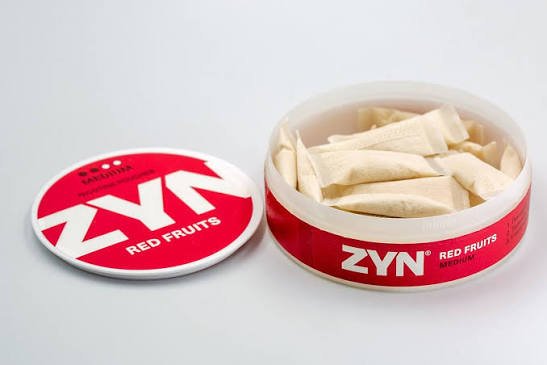
In 2024, millions of Zyn users walked into gas stations and convenience stores only to find empty shelves. There was no ban, no recall, and no factory fire. Demand had simply grown faster than supply could keep up.
This article breaks down what caused the Zyn shortage, how Philip Morris International responded, what the FDA decided, how retailers adapted, and where things stand today.
What Zyn Is and Why Demand Surged So Quickly
Zyn is an oral nicotine pouch — small, smoke-free, and spit-free. Users tuck it between the lip and gum, making it a discreet alternative to cigarettes and vaping. No smoke, no vapor, no mess.
That simplicity helped fuel rapid adoption. Adults switching from traditional tobacco products were drawn to the convenience. At the same time, younger users were exposed to the product through social media trends, which accelerated growth well beyond what industry forecasts had anticipated.
The scale of that growth is hard to overstate. According to NPR, over 130 million containers of Zyn were sold in the first quarter of 2024 alone. That is not a sign of steady, gradual growth — it reflects a product that went mainstream very quickly.
Zyn also dominates its category. The brand holds more than 70% of the U.S. nicotine pouch market, according to CNBC. When a product with that kind of market share runs short, the effects are felt broadly across the entire segment.
The Real Causes Behind the 2024 Shortage
Shortages were widely reported starting around May 2024 and became more severe through the summer months across many U.S. states. Consumers, retailers, and media outlets all noted the same thing: Zyn shelves were bare.
The cause, however, was not what many people assumed. Rumors spread quickly online — some claimed a government ban was in effect, others pointed to a factory incident or a deliberate supply restriction. None of those explanations hold up. Retailers and industry sources have specifically debunked these claims.
The actual cause was straightforward: unprecedented consumer demand collided with existing manufacturing capacity. The factories producing Zyn simply could not keep pace with how fast sales were accelerating. Supply chain and distribution pressures added to the gap.
Think of it like a grocery store running out of eggs during a period of high demand. The eggs are not banned — there just are not enough on the shelves yet because suppliers cannot restock fast enough. The Zyn shortage worked the same way.
The Wall Street Journal confirmed nationwide out-of-stock conditions and noted that the shortage was significant enough to slow Zyn’s sales growth and cause a slight dip in market share during peak shortage months — not because consumers stopped wanting the product, but because it simply was not available.
How Philip Morris International Responded
Zyn is manufactured by Swedish Match, which was acquired by Philip Morris International in 2022 for approximately $16 billion. That acquisition put one of the world’s largest tobacco companies in direct control of the fastest-growing nicotine pouch brand in the U.S.
When the shortage hit, PMI did not treat it as a minor logistics problem. The company committed more than $800 million to expand U.S. Zyn production, including constructing a new domestic manufacturing facility. That level of investment reflects how seriously the company viewed both the shortage and the product’s long-term potential.
The reason is clear: PMI earns significantly more per unit from Zyn than from conventional cigarettes. Restoring supply was not just about satisfying consumers — it was a direct financial priority.
However, building and opening a new factory takes time. According to Zarpouch, the new U.S. facility did not come online until 2025, which explains why the 2024 shortage lasted as long as it did. The investments were real, but the capacity relief arrived after the peak shortage period had already passed.
The situation is comparable to a carmaker that builds a new production plant after a popular model overwhelms its existing assembly lines. The solution works — but it does not solve the problem overnight.
How Retailers and Consumers Adapted
On the retail side, online seller Prilla introduced a temporary purchase cap of 30 cans per 30 days per customer. The goal was to prevent bulk buyers from clearing out inventory and leaving nothing available for regular users.
Brick-and-mortar shoppers had a different experience. Many consumers reported visiting multiple gas stations and convenience stores in the same day without finding their preferred flavor or strength. Popular options — particularly higher-strength varieties like 6 mg Cool Mint — were the first to disappear. Shoppers often had to settle for weaker alternatives or less familiar flavors when anything was available at all.
Some retailers responded by actively promoting competing nicotine pouch brands while Zyn stock remained tight. Brands that had previously lived in Zyn’s shadow gained more shelf space and visibility as a direct result of the shortage.
Consumer behavior shifted as well. When Zyn did appear in stock, many users bought larger quantities than usual to avoid running short again. Some switched to subscription-based purchasing or started buying online more regularly, where availability was sometimes more consistent than in physical stores.
What the FDA Decided — and Why It Matters
On January 16, 2025, the FDA authorized the marketing of 20 Zyn products — marking the first time any nicotine pouch product had received formal FDA authorization in the United States.
This is a significant regulatory milestone. The FDA determined that Zyn pouches contain fewer harmful ingredients than cigarettes. However, the agency also noted that the products still contain other chemicals, including small amounts of formaldehyde identified in at least one study. The FDA’s position is not that Zyn is risk-free, but that it presents a different and in some respects reduced risk profile compared to combustible tobacco products.
It is important to separate this regulatory decision from the supply shortage. The FDA authorization was not triggered by the shortage, and it does not directly fix supply issues. What it does do is formally confirm that Zyn products can remain legally on the U.S. market. That legitimacy may support continued — and possibly growing — demand going forward.
There are also ongoing public health concerns worth noting. NPR and The Hill have both reported on the product’s appeal to younger users, its high nicotine levels, and the role of social media in driving awareness. Health experts remain divided on whether products like Zyn represent a genuine harm-reduction tool or a new pathway to nicotine dependence.
Where Things Stand Now
As of early 2025, supply conditions have gradually improved. PMI’s new U.S. factory is operational, and the company’s substantial production investments are beginning to have an effect on availability. Purchasing limits at some online retailers have been eased, and in-store stock is more consistent in many regions.
That said, the shortage has not resolved uniformly. Availability still varies by location, flavor, and strength. Some areas continue to see tighter stock than others, and popular flavors remain more prone to running out than lower-demand options.
For consumers, a few practical points are worth keeping in mind. Online purchasing tends to offer more consistent availability than physical stores. Buying in moderate quantities rather than waiting for a shortage to strike reduces the risk of being caught without product. And given that Zyn’s growth trajectory has not slowed, there is a reasonable possibility that supply could tighten again if demand spikes outpace production in the future.
For a broader look at business and supply trends across industries, TheBizOutline covers developments worth following.
Final Takeaway
The Zyn shortage was not a mystery, and it was not the result of a ban or hidden corporate decision. It was a straightforward supply-demand problem — a product that grew far faster than manufacturing infrastructure could handle.
PMI has responded with significant investment, and the regulatory picture has become clearer following FDA authorization in early 2025. The situation is improving, but consumers should expect that a brand growing at this pace will remain susceptible to regional stock constraints for some time.
The shortage offers a useful reminder that even dominant consumer brands can be caught off guard by their own success. In Zyn’s case, the demand was real, the production response was real, and the supply catch-up took longer than anyone hoped.
Read Also: