

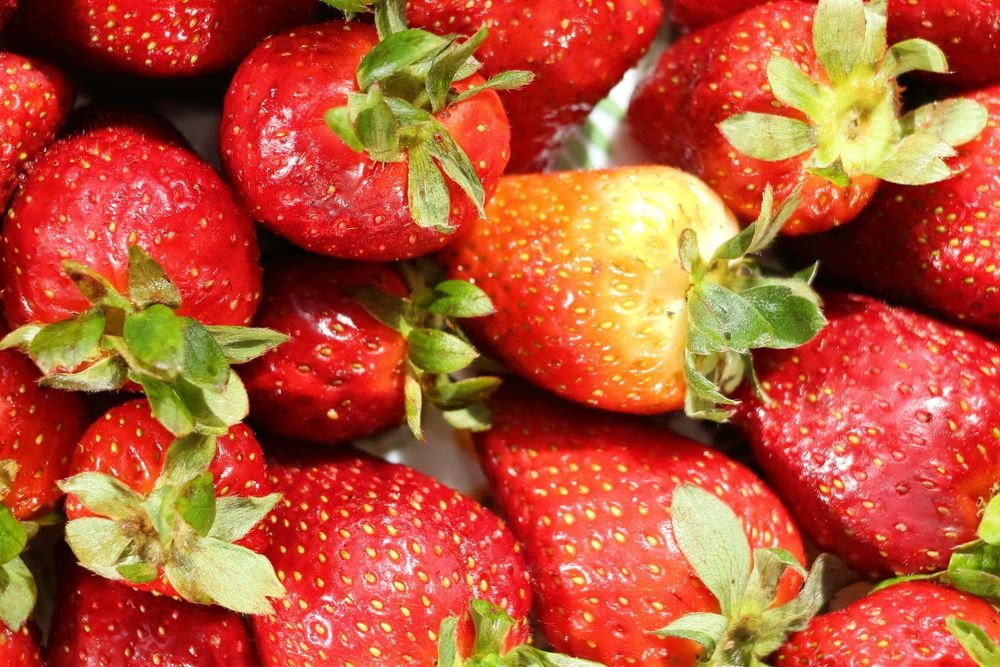
If you have noticed empty shelves at the grocery store, higher prices per pint, or a U-pick farm closing earlier than expected, you are not imagining things. Strawberry availability has become less reliable in 2025 and 2026, and shoppers across the U.S. are feeling it.
But the situation is more nuanced than a simple shortage. It is a combination of weather disruptions, regional supply gaps, and economic pressures — each one making the problem harder to solve quickly. This article breaks down what is actually happening, where it is happening, and what it means for consumers and farmers.
What a “Strawberry Shortage” Actually Means
When people hear the word “shortage,” they often picture empty stores with nothing left to buy. That is rarely how it works with strawberries. A shortage typically means fewer berries, lower quality, higher prices, or brief gaps at specific stores or farms — not a complete disappearance.
The distinction between national and regional shortages matters here. A storm that damages California fields does not necessarily mean strawberries vanish in Florida or Michigan. But it can feel that way, especially when grocery chains source from the same disrupted region.
Shortages also show up in less obvious ways. When berries arrive at a warehouse but fail quality checks, many are rejected and never reach the produce aisle. Some of that fruit gets redirected to in-store bakeries for cakes or desserts instead. So shelves can appear empty even when strawberries technically exist somewhere in the supply chain.
The Weather Events Behind the 2025–2026 Shortages
Several distinct weather events have disrupted strawberry supply over the past two seasons. Each one affected the crop in a different way.
California: Too Much Rain
Heavy rainfall in California’s growing regions saturated fields, damaged fruit and root systems, and significantly reduced the volume of harvestable, marketable berries. Industry reports described the market as “escalating,” with extremely limited supplies as a result. The problem was made worse because Mexico and Florida were not yet producing enough volume to fill the gap left by California.
Social media posts quickly spread news of the California situation, making what was essentially a regional disruption feel like a national crisis. Some of that perception was accurate — California is a dominant supplier during spring and summer — but the reach of the shortage depended heavily on timing and location.
Michigan: A Cold Spring
In Michigan, a cooler-than-normal spring in 2026 delayed flowering and compressed the growing season. One farmer reported harvesting roughly half of a typical crop. Customers who showed up to local farmers markets found very little available, and the U-pick season was cut significantly shorter than usual.
For many Michigan families, picking strawberries is an annual tradition. When farms announce limited quantities or early closures, it is not just an inconvenience — it directly reduces income for growers who depend on those weeks of peak demand.
North Carolina: Heat That Came Too Soon
In the Triangle region of North Carolina, an early spring heat wave in 2026 caused strawberries to ripen all at once, far ahead of the typical schedule. More than two dozen local farms were affected. Farmers had to move quickly to get customers into fields before fruit softened, overripened, or declined in quality.
There was no absolute shortage in that moment — berries existed — but the compressed window gave consumers far fewer days to buy high-quality fruit. Once the rush passed, the season was effectively over.
These three examples illustrate an important point: too much rain, too little warmth, and sudden heat each disrupt supply in entirely different ways. There is no single weather pattern behind the shortage. It is the cumulative effect of multiple disruptions across different regions and time windows.
Why One Region’s Problem Becomes Everyone’s Problem
U.S. strawberry supply follows a rough seasonal calendar. Mexico and Florida dominate winter production. California takes over in spring and summer. Then individual states like Michigan, North Carolina, and others contribute during their local peaks.
This structure creates vulnerability. When the dominant supplier for a given season is disrupted, other regions are often not ready to compensate. They may still be weeks away from harvest, or they simply do not produce enough volume to absorb a major shortfall.
When California experienced rain-related losses, Mexico could not fully step in, and Florida had not yet started its production cycle. Supermarkets received smaller shipments, accepted lower-quality fruit, or experienced temporary gaps on fresh produce shelves.
The interconnected nature of the supply chain means that a storm in one growing region has ripple effects that reach grocery stores across the country — sometimes within days.
The Economic Pressures Behind the Shortage
Weather is the most visible cause, but economic pressures are quietly making these situations worse and recovery slower.
California strawberry processors are operating in a difficult margin environment. Field prices have remained low while labor, packaging, and transportation costs have risen. At the same time, competition from lower-priced Mexican imports has intensified, reducing the financial incentive for domestic processors to expand contracted volumes.
When margins are tight, growers have less room to absorb bad seasons. Some may reduce planted acreage or invest less in protective measures. That means when a weather event does hit, the crop losses are harder to recover from and the supply gap is larger than it might otherwise be.
This is not a new problem, but it is becoming more pressing. According to a 2026 global market analysis by EastFruit, the strawberry market has shifted from simply asking “Is there enough fruit?” to asking whether fruit is arriving at the right time, with the right quality, and at a price that makes sense for both growers and buyers. The market, the analysis noted, has become “more demanding and less forgiving.”
In some cases, global planted acreage is actually increasing — yet growers still struggle with profitability because timing, quality, and costs create barriers that raw volume alone cannot solve. More strawberries being grown somewhere in the world does not automatically mean more strawberries on shelves in your city at the right price.
How This Affects Consumers
For shoppers, the effects show up in a few ways:
- Higher prices. When supply tightens, retail prices climb. Fresh strawberries that were once a routine grocery item become a more considered purchase.
- Variable quality. Berries that make it to stores may be smaller, softer, or less visually appealing when growing conditions were poor.
- Empty shelves. Temporary gaps of a week or two are possible, particularly during weather disruptions or seasonal transitions.
- Shorter U-pick seasons. Farms with reduced yields often close their fields earlier. Families who arrive expecting several weeks of picking may find the season already over.
It is worth noting that frozen strawberries, which are typically processed during peak season when quality and volume are both high, tend to remain more consistently available. If fresh berries are scarce or expensive, frozen is a practical alternative for smoothies, baking, and cooking.
What the Near-Term Outlook Looks Like
There is no sign that strawberries are becoming permanently unavailable or unaffordable. But the conditions that create shortages — weather volatility, thin grower margins, and seasonal supply gaps — are not going away either.
Some growers and researchers are working on strategies to reduce vulnerability. These include staggered plantings using different varieties to spread harvest risk, covered production using tunnels or greenhouses to protect crops from weather extremes, and diversification across regions or crop types to avoid catastrophic single-location losses.
Whether these adaptations become widespread enough to stabilize supply remains to be seen. In the meantime, shortages are likely to remain periodic and regional rather than continuous and national.
For broader coverage of business and market trends, TheBizOutline tracks developments across industries that affect both producers and everyday consumers.
The Takeaway
The strawberry shortages of 2025 and 2026 are real, but they are not a sign that the fruit is disappearing. They reflect a fragile supply structure that is vulnerable to weather disruptions, economic pressure on growers, and the timing-dependent nature of fresh produce.
Understanding what actually drives these gaps — rather than assuming the worst — helps consumers make better decisions and sets realistic expectations about seasonal availability. Strawberries are not a truly year-round crop by nature. When supply chains stretch to make them available year-round, any disruption along the way becomes everyone’s problem.
The best approach, both practically and economically, is to take advantage of local seasons when quality is highest, plan around known supply windows, and treat unexpected shortages as the exception — not a permanent new normal.
Read Also: