

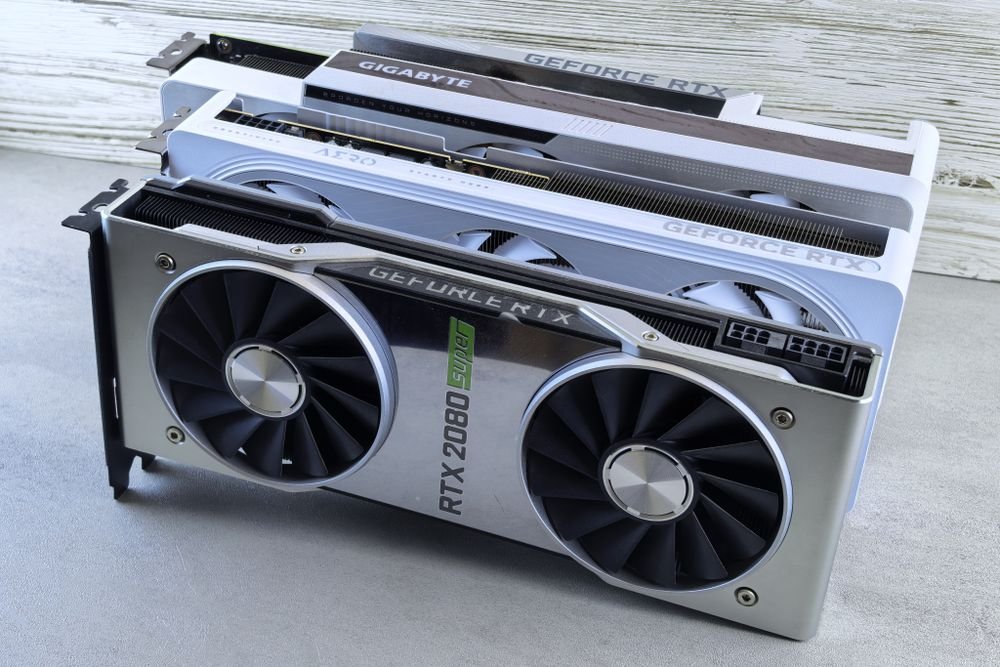
GPU shortages are back — but this time, cryptocurrency miners are not to blame. A combination of AI-driven demand and a global memory chip crisis has tightened GPU supply across both consumer and enterprise markets at the same time. And NVIDIA’s own CFO has confirmed the pressure is not going away anytime soon.
This article covers what is actually driving the 2026 GPU shortage, how it differs from past shortages, what it means for PC gamers and AI teams, how long it may last, and what buyers can realistically do right now.
This Is Not the 2021 GPU Shortage
During 2020 and 2021, cryptocurrency mining flooded the consumer GPU market. Miners bought graphics cards by the thousands to generate digital currency, leaving almost nothing on shelves for regular buyers. That shortage was painful, but it was also concentrated in the consumer space.
The 2026 shortage is different in structure and scope. This time, the pressure is coming from AI infrastructure buildout and a supply-side crisis in memory chips — specifically HBM (High Bandwidth Memory) and GDDR7. Those are the specialized memory types that modern GPUs depend on to function.
More importantly, this shortage is hitting both markets at once. Consumer GeForce gaming cards and enterprise AI accelerators like the H100 and B200 are both constrained. AI companies and large cloud providers — not miners — are now the dominant force absorbing available GPU supply.
Why GPUs Are Scarce in 2026: The Memory Bottleneck
To understand the shortage, it helps to think of GPUs like finished cars. The memory chips inside them — HBM3, HBM3e, GDDR7 — are the engines. Even if the car factory has plenty of capacity, an engine shortage limits how many finished cars can actually ship. That is exactly what is happening right now.
AI accelerators like the H100, H200, and B200 require HBM3 and HBM3e memory. This memory is extremely specialized and produced by only a handful of manufacturers, primarily Samsung and Micron. The demand for these chips from AI chip production has grown so fast that supply cannot keep pace.
According to industry analysis from Fusion Worldwide and infrastructure provider Spheron Network, HBM supply is being absorbed almost entirely by AI chip production, leaving very little for other applications. Samsung and Micron are both ramping up HBM3e production, but meaningful new capacity is not expected to come online until late 2026 — and existing order backlogs will not clear immediately.
On the consumer side, RTX 50 Series gaming GPUs require GDDR7, which is also under supply pressure. That compounds the shortage further, hitting gamers who have nothing to do with AI workloads.
NVIDIA’s Confirmed Shortages — and What the Rumors Get Wrong
There is a lot of speculation circulating online, and it is worth separating what NVIDIA has actually confirmed from what is forum rumor.
What Is Confirmed
NVIDIA CFO Colette Kress has publicly stated that GeForce RTX 50 Series supply will be “very tight” through at least fiscal 2027. This is not speculation — it is a direct acknowledgment from inside the company that the shortage is real and ongoing.
Reports from credible hardware outlets, including Overclock3D and TweakTown, indicate that NVIDIA cut consumer GeForce GPU production by roughly 30 to 40 percent in early 2026. The reason is straightforward: NVIDIA is prioritizing memory allocation toward higher-margin AI accelerators like the H100 and B200, which face far more extreme demand from enterprise customers.
A spokesperson for NVIDIA has stated that demand for GeForce RTX GPUs remains strong, that memory supply is constrained, and that the company continues to ship all GeForce products while working with suppliers to maximize memory availability. NVIDIA has also denied rumors that it plans to sunset specific RTX 50 SKUs, though it acknowledges shortages clearly.
What Is Still Rumor
Claims that NVIDIA will “completely stop” gaming GPU production in 2026, or permanently skip new gaming releases, are not confirmed by NVIDIA. These appear to originate from forum discussions and loosely sourced social posts. Some commentary channels and community threads have amplified these claims, but they should not be treated as fact.
What is confirmed: tight supply, production cuts, and memory reallocation toward AI chips. A total halt to gaming GPU production is not part of NVIDIA’s stated position.
How This Affects PC Gamers
For anyone trying to build or upgrade a gaming PC in 2026, the experience has become frustrating. Cards like the RTX 5070 Ti are frequently out of stock, prices are higher than expected, and delivery dates can slip by weeks or longer.
Think of it like trying to buy a popular games console at launch — except the launch has been stretched across months. You might find the card you want eventually, but you will likely pay more than the suggested retail price and wait longer than you planned.
Practical options for gamers include:
- Planning purchases earlier and being flexible about specific SKUs
- Considering older generation cards, which are more available and better priced right now
- Monitoring stock alerts through retailers rather than checking manually
- Being cautious of scalper pricing in secondary markets
How This Affects AI Teams and Enterprises
For AI startups, research labs, and enterprise data centers, the shortage is even more severe. Data center GPUs like the H100 SXM5 now carry lead times of 36 to 52 weeks through resellers. The H200 runs to 40 or more weeks. The B200 is reportedly allocated through the second half of 2027.
Major cloud providers and hyperscalers — Microsoft, Google, Amazon — reserved large blocks of GPU capacity well in advance. A small AI company looking to buy H100 nodes today faces a very different reality than a hyperscaler that locked in its allocation years ago.
Some older GPU models are more accessible. The A100 80GB carries 8 to 16 week lead times. The L40S is more available at 4 to 8 weeks and is increasingly used for inference workloads where top-tier training performance is not required.
Readers looking for broader business strategy context around managing supply chain constraints can find related coverage at TheBizOutline.
For AI teams navigating this environment, procurement has shifted from a simple purchase decision to an ongoing operational challenge. Useful strategies include:
- Planning GPU needs 6 to 12 months ahead, or longer for flagship hardware
- Diversifying across multiple cloud providers rather than relying on a single vendor
- Mixing GPU types — for example, using L40S for inference and reserving H100 access for training
- Using spot instances and saving checkpoints frequently so workloads can resume when capacity becomes available
- Exploring smaller “neo-cloud” providers, which sometimes have more accessible inventory than major platforms
How Long Will the Shortage Last?
Industry analysis from Fusion Worldwide and Spheron Network suggests the GPU market will remain tight through at least Q3 and Q4 of 2026. The gradual ramp of HBM3e capacity from Samsung and Micron is expected to ease some pressure in the second half of the year, but existing backlogs will not disappear overnight.
NVIDIA’s CFO has pointed to fiscal 2027 as the timeline for ongoing supply tightness, which means meaningful relief for consumers and enterprises alike may be further away than many buyers hope.
It is also worth noting that multiple factors are at play — AI demand, memory manufacturing constraints, packaging capacity at TSMC, and shifts in distribution practices. No single fix will resolve all of them simultaneously. The market is likely to ease gradually, not flip a switch back to normal availability.
The Bigger Picture
What makes the 2026 GPU shortage distinct from previous cycles is that it is structural, not just a demand spike. The transition from crypto-driven shortages to AI-driven shortages reflects a deeper shift in how GPUs are used globally. They are no longer primarily consumer electronics — they are core infrastructure for a technology transition that is still accelerating.
That means the rules for buying, planning, and managing GPU access have changed for nearly everyone involved — from a gamer waiting on an RTX 5070 Ti to an AI team trying to train a foundation model on a tight timeline.
The shortage will ease eventually. But buyers in both markets are better served by planning around realistic timelines than by waiting for a sudden return to easy availability.
Read Also: